Smart Book Recommendation System
An intelligent machine learning-based book recommendation system that suggests books based on user preferences and reading history, deployed live on Render cloud platform.
Try Live DemoProject Overview
A comprehensive machine learning solution for personalized book recommendations with live web deployment
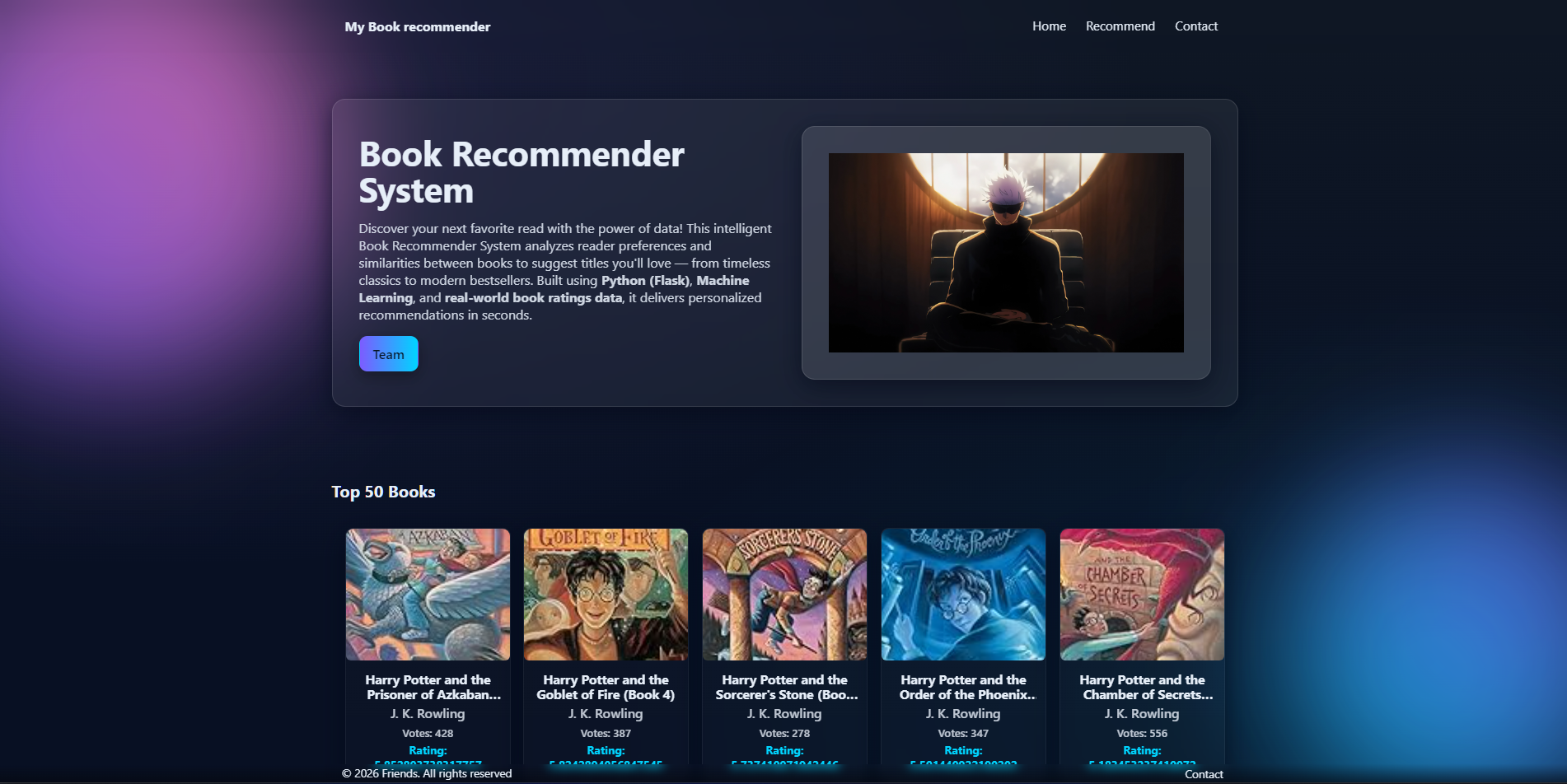
Key Features & Capabilities
Intelligent features powered by advanced machine learning algorithms
Advanced ML Algorithms
Hybrid recommendation system combining collaborative filtering (user-based and item-based) with content-based filtering using book metadata including authors, genres, and descriptions. Overcomes individual algorithm limitations for superior accuracy and rating prediction.
Interactive Search & Discovery
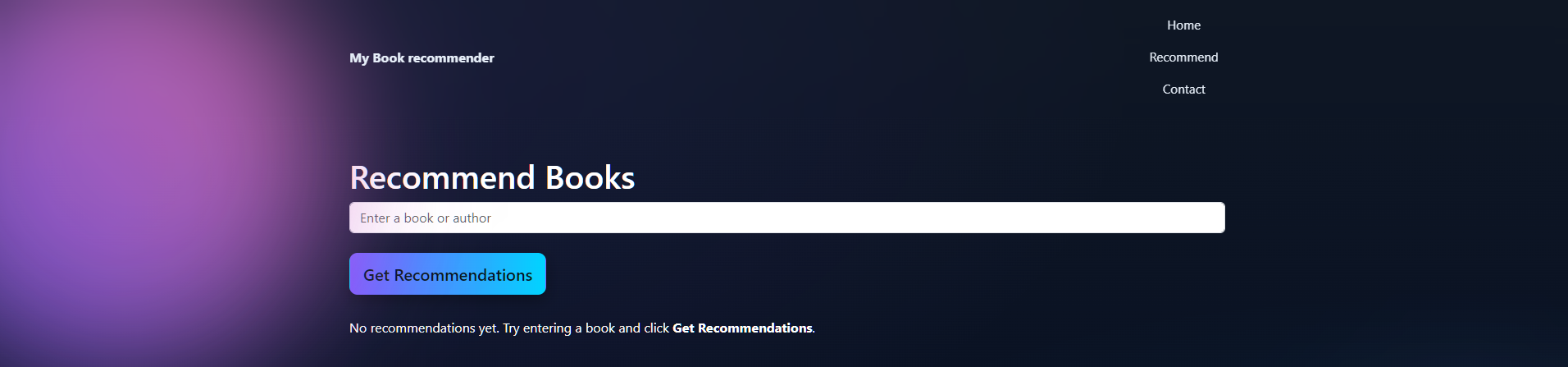
Real-time book search with autocomplete suggestions and instant recommendations. Features popular books showcase displaying trending titles based on community ratings, helping users discover highly-rated books and receive personalized suggestions effortlessly.
Responsive User Interface
Clean, intuitive web interface built with Flask featuring responsive design that works seamlessly across desktop and mobile devices. Optimized algorithms and efficient data structures ensure real-time suggestion generation with fast response times.
Smart Rating Prediction
Predicts user ratings for unread books using advanced machine learning models, helping prioritize recommendations based on expected satisfaction. Analyzes reading patterns to generate accurate personalized predictions for better book discovery.
Technology Stack
Modern technologies and frameworks powering the recommendation system
System Architecture
Modular design ensuring scalability and maintainability
Application Architecture
1. Data Layer:
The foundation consists of book datasets containing metadata (titles, authors, genres, descriptions, publication years) and user rating data. Data is preprocessed and cleaned using Pandas, with feature engineering applied to extract meaningful attributes for recommendation algorithms.
2. Model Layer:
Machine learning models are trained using Scikit-learn, including collaborative filtering models (user-user and item-item similarity matrices), content-based filtering models (TF-IDF vectorization of book descriptions), and hybrid models combining both approaches. Models are serialized and stored for efficient loading during inference.
3. Application Layer:
Flask web framework handles HTTP requests, routes user queries to appropriate recommendation functions, and manages session data. The layer implements RESTful API endpoints for book search, recommendation retrieval, and popular book queries, with efficient caching mechanisms for improved performance.
4. Presentation Layer:
Responsive web interface built with HTML, CSS, and JavaScript provides intuitive user interaction. Features include dynamic search with autocomplete, recommendation cards with book covers and metadata, rating displays, and smooth navigation between different views.
5. Deployment Layer:
Application is containerized and deployed on Render cloud platform with automatic scaling, continuous deployment from GitHub repository, environment variable management, and HTTPS security. Health checks and monitoring ensure high availability and reliability.
Machine Learning Algorithms
Sophisticated algorithms driving intelligent recommendations
Results & Performance
Demonstrating accurate recommendations and efficient system performance
Production-Ready Deployment
Successfully deployed live machine learning application with accurate recommendations, responsive web interface, and efficient algorithm performance on Render cloud platform.
Scalable Architecture
Modular design allows easy addition of new features, datasets, and algorithms without disrupting existing functionality.
Clean Codebase
Well-documented, modular code following best practices for maintainability, testing, and future enhancements.
Live Demo
Experience the recommendation system in action
Try It Live!
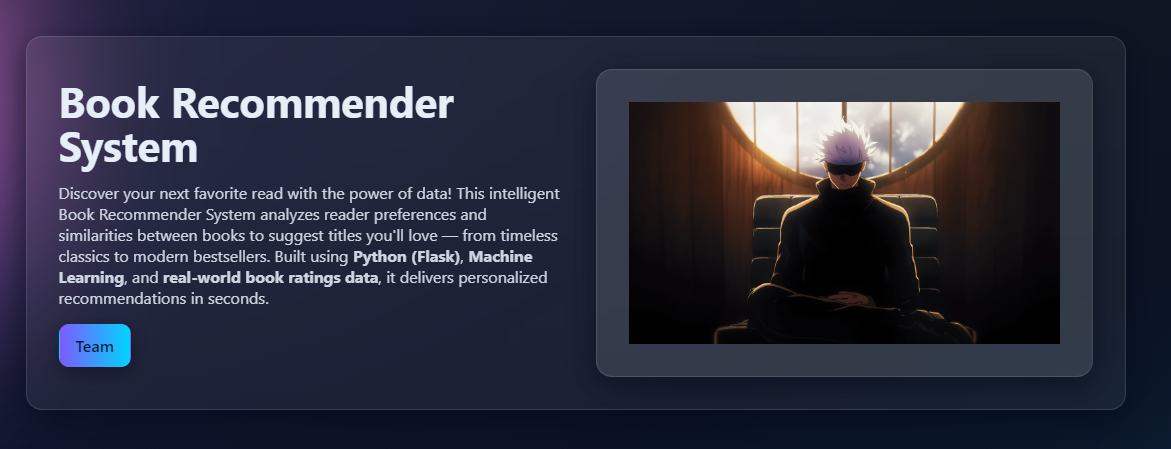
The Smart Book Recommendation System is deployed and running live on Render cloud platform. Visit the application to search for books, discover personalized recommendations, and explore popular titles. The system is fully functional with real-time recommendation generation.
Launch Live DemoNote: Initial load may take a moment as the server wakes up from sleep mode
Future Enhancements
Planned improvements and advanced features
Roadmap for Future Development
- User Authentication & Profiles: Implement user accounts to save reading history, preferences, and personalized recommendation lists.
- Deep Learning Integration: Incorporate neural networks and deep learning models (Neural Collaborative Filtering, Autoencoders) for improved accuracy.
- Social Features: Add friend connections, book sharing, reading lists, and community reviews to enhance collaborative filtering.
- Advanced Filtering Options: Enable users to filter recommendations by genre, publication year, length, rating threshold, and language.
- Reading Analytics: Provide personalized insights into reading patterns, genre preferences, and reading goal tracking.
- API Development: Create RESTful API for third-party integration and mobile app development.
- Real-Time Learning: Implement online learning to continuously improve recommendations based on user feedback and interactions.
- Multi-Language Support: Expand to support book recommendations in multiple languages with internationalization.
- Advanced Visualization: Add interactive charts and graphs showing recommendation reasoning and book relationships.
- Performance Optimization: Implement caching strategies, database optimization, and algorithm improvements for handling larger datasets.
Interested in This Project?
Try the live demo, explore the code, or get in touch to discuss machine learning projects